

Revisit Fidgeting to Improve Focus
Attention Magazine December 2024

Hyperactivity, characterized by excessive uncontrolled movements, is a well-recognized symptom in children, teens, and adults with ADHD. These individuals often engage in fidgeting—leg shaking, tapping fingers, or fiddling with things.For a long time, stopping the hyperactivity rather than finding ways to redirect it was a goal in treatment for ADHD. For some individuals, it remains a goal even today. Back in 2017, my initial article on this topic shed light on the concept that one can harness fidgeting to improve their focus rather than trying to address hyperactivity issues solely through stopping them altogether.
In the seven years since that article, the need to harness fidgeting has likely increased with a larger percentage of adults working from home or participating in a hybrid work model stemming from the COVID-19 pandemic. And in some school systems, there seems to be more understanding of the benefits of alternative seating options in school for children and teens with ADHD.
Each person is different in terms of the strategies and tools or combinations of strategies and tools that help them harness fidgeting to improve focus. This often depends on whether someone tends to use their legs, hands, or other body parts more often when they fidget naturally. The types of tools that work best can also vary based on the specific task at hand. Some individuals, given their propensity to lose attention easily, find that they need to rotate through different fidget strategies throughout the day or the week in order to maintain the novelty enough to keep using them.
Criteria for evaluating a fidget tool
The primary benefit of using a fidget tool is to harness the fidgeting and in turn improve focus. Tools that are distracting to others or that reduce attention in some way are not going to be a good option.
In order to benefit, the person needs to be able to use the fidget device mindlessly, without having to look at or consciously focus on it. If they must look at the fidget tool to use it, their visual attention is lessened on the task at hand. If the activity only involves listening to something, then this may be okay. A good general rule, therefore, is that the fidget device should not require one to look at it while using it.
For some tools and strategies, it is fairly universal whether someone must look at the tool or not to use it. There are tools, however, that work well for some individuals but become a distraction for those who need to look at the tool to use it. Thus, that specific tool would not be a good fit for that person.
Examples of a Fidgeting Tool Plan
JACK
Jack is a twelve-year-old boy who struggles with hyperactivity as a result of having ADHD. At school, he often uses the following items and strategies to help harness fidgeting:
- Small hand fidget key chain that he keeps in his pocket and uses discreetly
- Magnet attached to back of cellphone case that he attaches and detaches
- In his science classroom, he has permission to complete independent work standing in the back of the room at a tall counter
At home, Jack completes homework alternating between using:
- Standing desk and balance board
- Sitting while pedaling on a desk elliptical
- Sitting in a wobble chair at the kitchen table
JOHN
John is a forty-two-year-old man who has some hyperactivity challenges related to ADHD. He usually works from home. To help with fidgeting while working, John often rotates between the following tools:
- Standing desk and whirly board
- Stairmaster with standing desk
- Foot pedals when sitting down
To reduce fidgeting when watching movies with his wife and family, John sometimes uses:
- Whirly board (his wife and kids use them too sometimes)
- Hand fidget popper
- Elliptical while sitting on the couch
Here are some suggestions of tools and strategies for children, teens, and adults to help harness fidgeting to improve focus. Some of these can be used at school (permission from the school may be needed) or in an office setting. Others may be best used at home.
Hand Fidgeting
- Fidget cube, tangler, popper, or other device made for fidgeting that is not visually or auditorily distracting (therefore fidget spinners are NOT recommended)
- Grip strengthener weight
- Putty
- Keychain attached to belt loop or in pocket
- Tactile material attached to back of cellphone
- Stress ball attached with a stretchy string to a desk
- Exercise band attached to desk or chair that can be pulled on
Feet Fidgeting
- Small under-desk bike or elliptical to use while seated
- Foot pedals (often marketed for increasing circulation)
- Balance board under feet while sitting
- Kick or exercise bands attached to chair legs; can pull forward or push out
- Moving a rolled-up towel back and forth with feet
Use While Standing
- Standing desk or desk topper
- Under-desk stairmaster or elliptical to use while standing.
- Balance board that allows rocking back and forth and can stand on easily without actually balancing
- Circular balance board for slight balancing
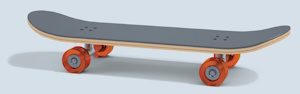
- Whirly board (a unique balance board that looks like a skateboard) with or without stabilizer ring to balance while standing
Seating That Promotes Harnessing Fidgeting
- Yoga ball or yoga ball chair
- Wobble chair
- Wobble chair cushion
AS YOU CAN SEE, a variety of different tools can be used to help a person harness their fidgeting and become better focused. Some strategies work well for both children and adults. Some tools can be used in multiple settings. If you (or your child or teen or significant other) are looking for ways to focus better and reduce excessive uncontrolled movements, consider trying out a few of these fidget strategies or use these as a starting point to create your own.
 Carey A. Heller, PsyD, is a licensed psychologist based in Maryland. He specializes in the evaluation and treatment of ADHD and executive function issues. Learn more at hellerpsychologygroup.com. Dr. Heller serves as the coordinator for the Montgomery County chapter of CHADD and as the chair of the editorial advisory board for Attention magazine.