

Focus Fitness: The Gym Isn’t Just for Your Body Anymore
We all understand that being physically fit takes effort. You go to the gym, lift weights, run on the treadmill, or do yoga to strengthen your body. But what about your mind? Just like muscles need exercise to stay strong, your brain needs regular training to stay mentally fit. This kind of training is called mental fitness, and it’s just as important as physical fitness for living a healthy, balanced life.
The gym for your brain
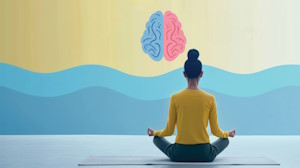 Think of your mind like a muscle. If you don’t exercise it, the muscle becomes weak. If you do the right workouts, it gets stronger and more resilient. Mental fitness is about practicing exercises that help you stay present, control your attention, and regulate your emotions. It’s a skill, like any other, that improves with practice. Just as an athlete trains for a big game, you can train your mind to be more focused, positive, and emotionally balanced.
Mindfulness and meditation
Mindfulness is the practice of bringing attention to the present moment and observing your experiences nonjudgmentally (that is, with openness and curiosity). Mindfulness is essentially a training that strengthens attention and attitude monitoring, and develops self-regulation skills. Silent meditation is one way to engage in this training.
For example, a simple breathing meditation exercise may ask you to:
- Sit quietly, focus on your breath, and notice when your mind drifts away.
- When it does (and it will), gently, without criticizing yourself, bring your focus back to your breathing.
Every time you do this, you’re strengthening your ability to control your attention and your responses.
Imagine basketball players practicing free throws. They shoot over and over again, building their skill so they can perform well in a real game. If they miss a throw—it is what it is—they keep playing. Practicing mindfulness works the same way. It strengthens your ability to stay focused on what’s important and brings your attention back when it wanders.
For those who feel they can’t meditate regularly, the good news is that you can also do this kind of mental training in everyday activities.
Training your attention
Just like taking stairs can prop up your physical fitness, you can do “attention” or “attitude muscle reps” throughout the day.
For those with ADHD or those who struggle with distractions, mindfulness in the midst of everyday tasks can be especially powerful. As you go about your day—maybe cooking and following a recipe or working on a work report—train your brain to notice when you’ve lost focus and bring it back, just like an athlete bringing their focus back to the game after a momentary distraction. Become curious about what grabs your attention and practice directing it back to where you meant to focus.
Training your attitude
In mindfulness practice, you also are training your attitude to counteract the common automatic tendency to criticize or feel negative about your experiences. We know that it is easy to make negative assumptions before you even let yourself experience your day fully as it is. So, in mindfulness, we talk about being nonjudgmental, open, curious.
Another way to train attitude is by focusing on gratitude. Just like doing pushups makes your arms stronger, practicing gratitude strengthens your ability to see the positive side of life. For example, many individuals have a habit of harping on about the negative. This isn’t their fault—our brains are wired to notice problems more than successes. But you can train yourself to focus on the good by keeping a gratitude journal.
Each day, write down three things you’re grateful for. At first, it might feel forced. You might write things like, “I’m grateful for food,” or “I’m grateful for my bed.” But over time, this practice changes the way you think. Eventually, you start noticing more positive things throughout the day. Just like working out, the more you practice, the easier it gets.
Studies show that gratitude helps reduce stress and improve mood. When you train yourself to look for the positive, you become more resilient in tough situations. Just like an athlete learns to stay positive after a loss and keep training, you can learn to shift your attitude and stay motivated in life.
Emotional regulation: practicing control over feelings
Have you ever seen a professional athlete stay calm under pressure? Whether it’s a football player taking a game-winning kick or a gymnast performing on the balance beam, they don’t let their emotions take over. This is because they’ve practiced staying calm in stressful situations.
You can do the same thing with your negative emotions. One powerful way to train this skill is to put yourself in situations that trigger strong emotions and practice noticing and managing them. For example, if you know certain political opinions make you angry, try watching a news channel that you strongly disagree with. As you notice yourself getting upset, practice naming your emotions and then doing something to calm yourself down.
A great technique for emotional regulation is deep breathing. When you feel yourself getting angry or anxious, take a deep breath in for four seconds, hold it for four seconds, and exhale for four seconds. This slows your heart rate and helps you stay in control.
By regularly practicing emotional control in safe situations, you’ll be better prepared to handle stressful moments in real life—just like athletes practicing under pressure so they can perform well in a real competition.
The key to mental fitness: consistency
The key to success in physical fitness is consistency. You don’t get strong from going to the gym once. You have to work out regularly to see results. The same is true for mental fitness. Practicing mindfulness, gratitude, and emotional regulation every day will make your mind stronger over time.
Start small. Try meditating for just five minutes a day. Before bedtime, write down three things you’re grateful for.
When you notice yourself getting frustrated, take a deep breath and practice calming down. Overall, be curious where your attention goes automatically and play with shifting it. These small exercises add up, just like small workouts build physical strength.
The payoff: a stronger, more resilient mind
Mental fitness isn’t about eliminating stress or never feeling upset. It’s about training your mind to handle life’s challenges better. Just like a fit body can handle physical stress, a fit mind can handle mental stress.
By practicing mindfulness, gratitude, and emotional regulation, you’ll improve your focus, develop a more positive attitude, and gain better control over your emotions. These skills will help you in school, at work, and in your personal life. They’ll make you more resilient, just like a well-trained athlete who can bounce back from a tough game.
So, if you’re ready to get mentally fit, start training today. Your mind, like your body, gets stronger the more you exercise it. With consistent practice, you’ll develop the mental strength to handle whatever life throws your way.
 Jeff Copper, MBA, PCC, PCAC, is an attention coach and expert on attention issues. He founded DIG Coaching Practice and is the founder and host of Attention Talk Radio and Attention Talk Video. He coaches individuals with ADD/ADHD symptoms who are seeking personal and business results by helping them realize their potential. As someone who has had to learn to manage attention and deal with his own challenges, he helps his clients understand themselves and how their minds work. Copper received a bachelor’s degree from Indiana University, an MBA from University of Tampa, professional designations from ICF, PAAC, and certification programs at ADDCA and CTI. He is a member of ADDA, CHADD, ACO, PAAC, and ICF, and serves on the editorial advisory board of CHADD’s Attention magazine.
 Lidia Zylowska, MD, is an associate professor in the department of psychiatry and behavioral sciences at the University of Minnesota and a faculty member of the university’s Earl E. Bakken Center for Spirituality and Healing. She is an internationally recognized expert in adult ADHD and mindfulness-based therapies. Her research pioneered the application of mindfulness in ADHD. She developed the Mindful Awareness Practices (MAPs) for ADHD program and helped co-found the UCLA Mindful Awareness Research Center. Her work has been featured in Time, the Boston Globe and the New York Times, as well as ADDitude and Attention. Dr. Zylowska is also a diplomate of the American Board of Integrative Holistic Medicine and the author of two books, The Mindfulness Prescription for Adult ADHD and Mindfulness for Adult ADHD – A Clinicians Guide.
Adapted from an Attention Talk Radio interview with Lidia Zylowska, MD, that aired 1/29/25. To listen to the entire interview, go to https://www.spreaker.com/episode/adhd-and-mental-fitness-attention-exercises–63937161.