

Cracking the Code on Motivation for Children with ADHD
Attention Magazine December 2025
You’ve taken away screen time. You’ve even tried pleading with your child; however, they still struggle to stay on task or follow directions. You’re exhausted. If this sounds familiar, you’re not alone. Many parents of children with ADHD find themselves stuck in a cycle that never seems to “stick.” You might even wonder: Shouldn’t they just know how to behave?
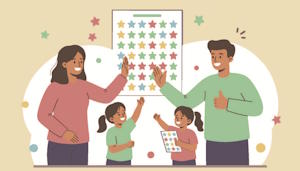 You’re not wrong in wanting your child to do what’s expected without needing constant reminders, and over time, that is the goal. However, for children with ADHD, rewards help them build the internal motivation and confidence they need to eventually behave appropriately on their own. You’re not “spoiling” your child by rewarding good behavior. You’re helping them build the skills and habits they need to succeed. Motivation looks different for kids with ADHD and understanding how it works can transform the way you support your child’s growth.
Let’s break down how rewards (used the right way) can help children stay motivated and reduce challenging behaviors. As we discuss rewards, we’d like to point out that “rewards” can also be privileges that your children may already be receiving (such as electronics, TV time, dessert after dinner).
Rethinking rewards and punishment
One of the biggest myths around behavior strategies is, “I don’t want to bribe my child to behave.” A bribe is something you offer in the moment to stop a negative behavior; for example, “If you stop screaming, then I’ll give you a cookie.” Bribes can unintentionally reinforce the exact behavior you are trying to stop, because kids learn that misbehavior (screaming) leads to something positive (the cookie). A bribe may also be giving your child a reward before a situation where you want them to behave appropriately: “I will give you a cookie now if you promise to use your indoor voice.” In this scenario, your child receives the positive reinforcement (the cookie) before having the opportunity to engage in the positive behavior (using their indoor voice).


On the other hand, a reward is something your child earns after they meet a goal you’ve agreed on in advance: “If you keep a low voice in the store, then you can get a cookie.” This type of reinforcement increases the motivation for a child to continue engaging in positive behaviors. In society, adults respond to rewards all the time. We work for paychecks and promotions, and we are more likely to be happy with relationships that provide us with positive feedback (when friends or partners express appreciation for our actions). When our efforts are reinforced by “adult rewards,” we are motivated to become more productive or better friends and partners. Kids are no different—other than needing such reinforcement more frequently.
Children with ADHD often struggle with intrinsic motivation, which is the internal drive to do something because it’s enjoyable or personally fulfilling, not because of a reward or outside pressure from others. Their brains are wired in a way that makes it harder to push through boring or difficult tasks (like homework) unless there’s a clear and immediate payoff. That’s why rewards are such a powerful tool.
When it comes to punishment, it’s important to distinguish between two types: positive punishment, which adds something unpleasant after a behavior (spanking or yelling), and negative punishment, which takes something desirable away (removing privileges or using time-out).
While positive punishment might stop a behavior in the short term, it doesn’t teach or motivate kids with ADHD to do better next time. In fact, excessive corporal punishment can lead to increased child aggression, low self-esteem, and a breakdown in the parent-child relationship. In contrast, negative punishment, like timeout and privilege removal, are part of most evidence-based parenting programs and should be paired with positive reinforcement strategies. Kids with ADHD learn best when they’re shown what to do, not just told what not to do.
Understanding what works: rewards vs. punishment in real time
In our study, we looked at differences in sensitivity to rewards and punishment among children with ADHD before and during a summer treatment program.
Before treatment started, parents reported how strongly their child reacts to the possibility of receiving a reward (“My child is very motivated by the chance to win/earn something”) or punishment (“My child avoids doing things if they think they might get in trouble”). During treatment, parents were provided with daily feedback about their child’s behavior via a daily report card (DRC). Parents then provided daily, at home, DRC-contingent rewards based on how their child behaved that day at camp (based on a green, yellow, and red color system). A green day resulted in the most desirable reward, a yellow day provided a moderate reward, and a red day provided no reward. Parents then reported how much their child liked their reward or how much they disliked not receiving a reward.
Consistent with prior research, we found that children in our program were more motivated by earning rewards than by being punished both before and during the program. This suggests that reward-based strategies tend to be more effective than punishment when it comes to managing behaviors in kids with ADHD.
Now you may be asking, “Did they get tired of being rewarded?” We found that even after seven to eight weeks, children continued to enjoy the rewards they were receiving for their good behavior, and their interest in positive reinforcement did not fade over time! In fact, their behavior improved, and we saw fewer “red days” (behavioral setbacks) throughout the program. This suggests that well-designed reward systems can have a lasting impact on increasing positive behaviors in young children with ADHD.
What actually works? Practical tools for rewarding children
So, how can you use these principles in everyday life? Here are some simple tools that can be used at home or school:
● Make rewards realistic. Avoid rewards that are expensive, time-consuming, or hard to follow through on. For example, promising a trip to the park is great, but if it’s raining, then it may not be possible. Similarly, giving your child a new toy every day might not be feasible. Instead, aim for rewards that are simple for your child.
● Use what you already offer but make it earned. Your child may already be enjoying privileges that can be powerful reinforcements. Does your child already get screen time, dessert, or video games? You might not think of these as rewards, but they can be powerful incentives when framed as something your child now must earn. Instead of giving these privileges automatically, tie them to positive behaviors. For example, you can say, “Once you finish your homework, you can watch your favorite show.”
● Keep rewards timely. Give rewards as soon as possible after the positive behavior so the child clearly connects the two (positive behavior = reward/privilege). This is especially important for children with ADHD, who can struggle to link actions with consequences when there’s a delay.
● Let your child help choose the rewards. Create a menu of reward choices with your child to help identify what motivates them. Include a mix of small, daily rewards (such as extra screen time or a special snack) and bigger rewards they can work towards earning overtime (a weekend outing, for example). Involving your child in the creation of the menu keeps them engaged and makes them more likely to follow through.
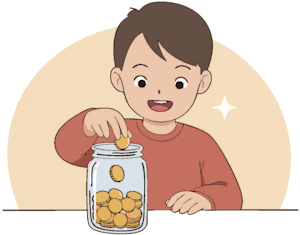
● Change it up. While children with ADHD do not appear to habituate to rewards, it may still be worthwhile to change things up to keep things exciting for them. Try rotating rewards on your menu, offering new options, or letting your child save points toward something more exciting. For example, your child can earn a token for every chore they complete throughout the week, and when they fill up the jar with tokens then they can “cash in” for a prize.
● Use labeled praise. One of the easiest and most effective tools you can use is labeled praise, which is a form of social reinforcement. This means being specific when you praise your child, so they know exactly what behavior you’re encouraging. For example, instead of saying “Good job,” try saying, “Thank you for using calm words when you were frustrated.” Labeled praise provides clear, positive reinforcement for the behaviors you want to see more of. When used consistently, it helps build your child’s confidence and increases the chances they’ll repeat the positive behavior in the future.
Starting a different approach
 If you feel like you’re stuck in a cycle of discipline, reminders, and meltdowns, you’re not failing. You may just need a different approach. By using rewards that are consistent, realistic, and meaningful, you can help your child stay motivated and reduce challenging behaviors while strengthening your relationship along the way.
Start small. Stay consistent. And remember that every time you reinforce your child’s positive behaviors, you’re helping them take one more step toward long-term success.
 Paulo Graziano, PhD, is a licensed psychologist and professor of psychology at the Center for Children and Families at Florida International University. He is a renowned expert in early childhood ADHD and disruptive behavior disorders. As the director of the SELF-Regulation Laboratory, his research strives to integrate theory and methods from developmental psychology and neuroscience to examine the development of children’s self-regulation skills and how such processes can be applied to the understanding and treatment of ADHD and related comorbidities. His work has been supported by both federal grants (NIMH, IES) and local agencies (The Children’s Trust) and has resulted in over a hundred peer-reviewed scientific articles along with 150+ talks and posters at national and international conferences. Clinically, he directs a parent-child interaction therapy clinic at FIU along with a summer treatment program for young children with ADHD and related comorbidities who are transitioning to and from kindergarten.
 Melissa L. Hernandez, MS, is a doctoral candidate in the clinical science in child and adolescent psychology program at Florida International University. For nearly a decade, she has worked with families of young children with ADHD and other behavior challenges. She provides evidence-based interventions such as parent-child interaction therapy and behavioral parent training to help parents strengthen relationships with their children and support positive behavior change. Her research, supported by the National Institute of Mental Health (NIMH R36 grant), focuses on understanding children’s emotional development and how parenting practices shape empathy and self-regulation in early childhood. She is passionate about bridging research and clinical practice to develop effective, compassionate strategies that help children thrive at home and in school.
FOR MORE INFORMATION
The Summer Treatment Program K at Florida International University is a comprehensive school readiness program for children entering kindergarten with behavioral, emotional, and learning challenges. Learn more at https://ccf.fiu.edu/summer-programs/summer-treatment-program-pre-k.