
Virginia Douglas, PhD
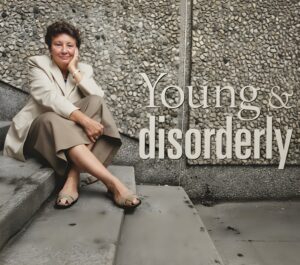
(Image restored and illustrated from a Citizen's Weekly newspaper photo/article, Dec. 8, 1995)
Her research influenced the inclusion of ADHD in the Diagnostic and Statistical Manual of Mental Disorders.
Virginia I. Douglas, PhD, (1927–2017) was a Canadian psychologist whose research fundamentally reshaped the understanding of ADHD from previous models. At the time, ADHD, then called hyperkinesis, was believed to be defined primarily by excessive motor activity. Dr. Douglas challenged that prevailing view. In her landmark 1971 presidential address to the Canadian Psychological Association, and in her highly cited 1972 paper, “Stop, Look, and Listen: The Problem of Sustained Attention and Impulse Control in Hyperactive and Normal Children,” she argued that deficits in sustained attention and impulse control, not hyperactivity alone, were central to the condition. Her work shifted the scientific focus from visible overactivity to the less obvious but more impairing difficulties in attention and self-regulation.
Dr. Douglas went on to propose a three-component model of self-regulation—attentional, inhibitory, and strategic/organizational processes—providing a cognitive framework that helped clinicians and researchers better understand the differing presentations of ADHD. She emphasized rigorous laboratory-based measurement to distinguish underlying attentional and inhibitory shortfalls from broader executive-function challenges, advancing the field toward more precise assessment and intervention. Her work broadened the diagnostic lens and laid the foundation for the modern understanding of ADHD as a neurodevelopmental condition affecting attention, inhibition, and executive functioning.
Dr. Douglas’s research directly influenced the formal recognition of ADD, with or without hyperactivity, in the DSM-III. Later, ADD was updated to the current name, ADHD. This diagnostic shift marked a turning point in the field, expanding the criteria beyond hyperactivity and laying the foundation for the modern definitions of ADHD. Through her decades of scholarship at McGill University and her clinical work at the Montreal Children’s Hospital, Dr. Douglas helped move the field from behavior-based assumptions to evidence-based understanding—changing how generations of children, especially girls who were often overlooked, would be recognized and supported.