
Remembering Thomas E. Brown, PhD
Russell A. Barkley, PhD; Kathleen G. Nadeau, PhD; Mary V. Solanto, PhD
Attention Magazine February 2026
Download PDF
The Consummate Scientist-Practitioner
Russell A. Barkley, PhD
It was with much shock and sadness that I learned of the passing of Thomas E. Brown, PhD, this past September and the great loss this has caused not only for his family but for the field of ADHD as well. I am honored, however, to have been asked to write about views on Dr. Brown’s many contributions to the clinical practice and science of ADHD.
To his friends and colleagues in the field, he was simply Tom, and so I shall refer to him here with fondness and affection. His life, education, and accomplishments have been eulogized in his obituary in the New York Times that month and by CHADD, so I will not repeat those details here. Instead, I wish to offer my personal view of him and his extensive contributions over four decades to the field of interest we shared in so much, that of ADHD.

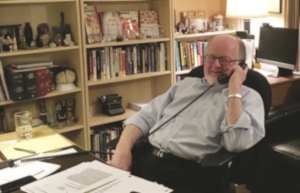
Thomas E. Brown, PhD, 1942-2025
To me, Tom was the consummate scientist-practitioner; a guiding model for the training and professional practice of psychologists in which we were both instilled during our graduate and postgraduate training. He followed the research literature on ADHD closely as well as the findings presented at scientific meetings on the topic. He then incorporated these into the best advice and practices for his clients, based on the available reliable evidence, and conveying them skillfully into the clinical care he provided to his clients.
But he also was a practicing scientist, contributing at least thirty scientific articles to the field which further circled back to make him an expert clinician. Moreover, he was well known for infusing his advice to clients as well as his professional presentations with the great wisdom he had gained from working with thousands of clients in his clinical practice who left their indelible influence on him and his subsequent work with new clients.
This reciprocal influence between science and practice, between his own work and that of other clinical scientists, and between the influence he had on clients as well as they on him, was a hallmark of his daily professional life and so his career. And it also greatly informed his many trade and professional books on the topic.
So, it was always a pleasure for me to meet up with Tom at the various scientific and clinical conferences, professional conventions, and the many CHADD meetings we both attended. This frequently led to our having numerous informal discussions about our evolving views on the nature, diagnosis, assessment, and management of ADHD. We were both early champions of the view that ADHD was far more than just an attention disorder—that it was, in fact, a disorder of the highest level of brain functioning, known as the executive functions (EF). They are so called because they directed, guided, and adjusted the goal-directed actions of people so as to better succeed in life and see to their own long term welfare. This readily accounted for the numerous and serious impairments that people having ADHD experienced in life that could not be so readily understood from the earlier view of ADHD as simply a disorder of attention (and inhibition).
Despite this similarity in our main views on ADHD, we also differed in what component functions we thought were involved in the larger umbrella term of EF and how it operated. Tom’s initial conceptualization of EF did not include a component of behavioral inhibition that I thought was a central difficulty in the disorder—a difference reflected in the rating scales of ADHD and EF that we both went on to develop for use in research and clinical practice. We further differed in that I saw EF as underlying the human capacity for self-regulation and even used the definition of the latter term to further define what human cognitive functions would constitute an EF in contrast to the many non-EF mental capacities.
Where Tom saw the EF components of attention, self-activation and motivation, flexibility, and problem solving, among others, as being at the same level of EF and its operations, I conceptualized them as forms of self-directed mental actions (as exemplified in Lev Vygotsky’s theory of self-directed private speech) used to achieve self-regulation over time toward the future. I also viewed them as being arranged hierarchically and developmentally, such that early arising ones, such as self-awareness, inhibition, and working memory (sensing to the self), eventually contributed to later arising ones, such as emotional and motivational self-regulation and problem-solving, all of which took several decades to fully mature.
On occasion, we debated these differences both publicly and privately in our views of EF but always in friendly and respectful ways. Despite such differences, we both acknowledged that EF was central to understanding and managing ADHD and that it could also be affected, to varying degrees, in other mental and neurodevelopmental disorders, such as autism spectrum disorders.
Tom was also an inspiring advocate for those having the disorder and their families, and he contributed numerous hours of his time toward educating the public, governments and their institutions, and advising national and international organizations for ADHD, such as CHADD, ADDA, ADDISS (United Kingdom), and CADDRA (Canada), among many others. Tom understood the importance of “paying it forward” in the giving of his time and wisdom to others, and especially the next generation of clinical scientists, practitioners, coaches, and others wishing to work with and advocate for those having ADHD.
A skilled and entertaining presenter with a preacher-like persona and delivery, he was invited to speak at hundreds of conferences internationally. There he easily and readily conveyed his clinical wisdom to audiences, both lay and professional, thus leaving behind a legacy of advanced knowledge about ADHD that will carry on long into the future at improving the way the public and professionals understand and manage ADHD.
A fellow psychologist once said that we can measure the meaning, value, and importance of someone by the number of people who will mourn his absence, arising as it does from his influence upon their life. By this or any other measure, Tom was an incredibly meaningful, valuable, and important individual in our lives. He will be greatly and widely missed.
Russell A. Barkley, PhD, is a clinical psychologist, preeminent researcher, and recognized authority on ADHD. Before retiring in 2021, he served on the faculties of the University of Massachusetts Medical Center, the Medical University of South Carolina, and Virginia Commonwealth University School of Medicine. The author of numerous acclaimed books, rating scales, and clinical manuals, as well as scientific articles and book chapters related to the nature, assessment, and treatment of ADHD, he was also founder and editor of the bimonthly clinical newsletter, The ADHD Report. Dr. Barkley has presented more than 800 invited addresses internationally and is widely cited in the national media.
Always an Independent Thought Leader
Kathleen G. Nadeau, PhD
Thomas E. Brown, PhD, caught my attention very early in my career as an ADHD specialist. He was clearly a deep thinker and didn’t follow the herd, always coming up with new ways of understanding ADHD.
 In the years when so many in the ADHD field were insisting that one couldn’t have ADHD and also be high achieving, Tom led the charge to understand the twice-exceptional (2e) experience. While fellow psychologists were testifying in court that high-achieving students should not be eligible for accommodations on high stakes exams, Thom was busy at Yale developing a ground-breaking ADHD clinic for Yale students—all, by definition, high-achieving students.
Over the years, while so many ADHD questionnaires focused narrowly on the DSM criteria for ADHD, Tom once again broke ranks and developed his questionnaire that focused entirely on executive functioning skills, the Brown ADD Scales, which I have used for many years. I have quoted him countless times about his conceptualization of ADHD as a “foundational” disorder—a disorder that seems to set the stage for the many co-occurring conditions that so often accompany it.
Every step of the way, he was an independent thought leader. His shoes are going to be very difficult to fill. He’ll be very much missed.
Kathleen Nadeau, PhD, is an internationally recognized authority on ADHD and a frequent lecturer in the United States and abroad. Prolific in her writing, clinical work, teaching, and dedication to sharing the latest science and practice of ADHD assessment and treatment across the lifespan, she helped a generation become aware of ADHD in women and girls.
The Best of Colleagues
Mary V. Solanto, PhD
I am sure that everyone who knew him will agree that Thomas Brown was the best of colleagues. He was always interested in and supportive of others’ work. His own work showed enormous insight into the difficulties experienced by children and adults with ADHD. His research contributed greatly to our understanding of the cognitive processes associated with the condition.
In addition to all that, he was extraordinarily effective in communicating his knowledge to lay people via his books and presentations. He was certainly a friend and advocate to the field—one whom we shall sorely miss.
Mary V. Solanto, PhD, is professor of psychiatry at the Zucker School of Medicine at Hofstra/Northwell in Long Island, New York. She has worked extensively with children and adults with ADHD, and she developed a novel cognitive-behavioral intervention for adults with ADHD.
Find additional memorial messages, tributes, and information, as well as articles by Dr. Thomas E. Brown, at chadd.org.
The Dr. Thomas E. Brown Memorial Fund
To honor his lifelong dedication to understanding and supporting individuals with ADHD, the Brown family has established the Dr. Thomas E. Brown Memorial Fund in partnership with CHADD. We hope this fund will grow into a lasting endowment that reflects Dr. Brown’s lifelong commitment to helping individuals with ADHD live fuller, more empowered lives. This initiative will begin with CHADD’s Young Scientist Award, renamed The Dr. Thomas E. Brown Pioneer Award, presented annually at the International Conference on ADHD to two young researchers who are helping to advance our knowledge of ADHD. To learn more, or to make a donation, go to https://bit.ly/DrThomasEBrownMemorialFund.
Other Articles in this Edition
Focusmate: A Simple, Yet Ingenious Tool
ADHD and Co-Occurring Medical Conditions
Between the Sessions: The Power of Showing Up
Recognizing Accomplishment, Celebrating the Future: The 2025 CHADD Awards
Remembering Thomas E. Brown, PhD
Peer Problems: How to Help Your Child with ADHD
ADHD and Incentives: Practical Guidance for Tutors, Coaches, and Parents
Breaking the Cycle: My Journey from Bullying to Emotional Regulation
“I’ll Be Happy When…”: How ADHD and the ‘Rat Race’ Keep Us Future-Focused and Miserable
Striving for Resilience in a Long-Term Romantic Relationship