
The Gentle Giant of ADHD: Honoring L. Eugene Arnold
Peter S. Jensen, MD
Attention Magazine August 2025
Download PDF
In late April 2025, the field of child and adolescent mental health lost one of its most enduring champions: Lawrence “Gene” Arnold, MD, MEd. For those of us who knew him—as colleagues, collaborators, mentees, and friends—his passing is both a personal and professional loss. He was, as many have said in the days since, the heart and glue of a generation of ADHD research, a scientist-humanist who merged rigor with kindness, and a friend who could elevate any room, any meeting, any study, simply by being part of it.

Lawrence “Gene” Arnold, MD, MEd
I had the privilege of hiring Gene to the National Institute of Mental Health (NIMH) in 1990. I still remember our first phone meeting prior to hiring him. He was already a respected psychiatrist—vice chair at Ohio State University—known for his intellect, humility, and mentorship. But I hesitated. Though Gene’s qualifications were stellar, I worried that he might not have the energy or endurance for the ambitious, fast-paced work ahead.
My concerns deepened just weeks before his scheduled arrival, when he called me from his hospital bed in a cardiac unit. Ever the optimist, he assured me he was “fit as a fiddle.” But I was alarmed—not reassured. I remember thinking: How long would he be healthy enough to help us launch this effort? Would he even make it to the starting line?
And yet, when he arrived at the old Parklawn Building, he bounded up ten flights of stairs with ease. I was a marathoner at the time, and even I had trouble keeping up. From that point forward, Gene never looked back—and my early doubts gave way to awe. What I could never have foreseen on that phone call, and what none of us could have imagined, was that this man—whom I had worried might last a few years—would become the enduring heart of the field for the next thirty-five.
That study, of course, became the Multimodal Treatment Study of Children with ADHD (MTA)—the first major, multisite clinical trial in the history of child mental health. Gene’s fingerprints are all over it. He was the executive secretary, the tireless notetaker, the calm in the room when tempers flared, the shepherd of ideas, and the builder of consensus. At one point, there were eleven weekly meetings across teams. Gene attended every single one. He brought not only detailed minutes and insight, but apples and cider from his beloved Ohio orchard—a small gesture that became his signature of generosity and warmth.
Gene’s work on the MTA alone would have secured his place in history, but his impact spanned decades and disciplines. A summa cum laude graduate of The Ohio State University College of Medicine, with training at Johns Hopkins and the US Public Health Service, Gene built a career that merged his love of psychiatry with an unwavering commitment to children and families. His contributions ranged from psychopharmacology to nutrition, from traditional clinical trials to controversial investigations into natural products. He was as comfortable challenging assumptions as he was comforting a young investigator facing doubt.
He never truly retired. In his late eighties, Gene remained an active faculty member at OSU, a co-investigator on the Micronutrients for ADHD in Youth (MADDY) study, a frequent collaborator on ADHD research papers, and CHADD’s resident expert. As recently as the day before he died, Gene was reviewing manuscripts, corresponding with colleagues, and planning new projects—including one with psychiatrists in Iran to study nutrition in children with learning disorders.
Gene showed us what it means to lead with humility and to never stop being curious. He modeled how to fight for evidence without fighting each other.
Gene had an unmatched ability to bridge divides—between people, between fields, between ideas. He was, in the words of Larry Greenhill, the “institutional memory” of the MTA. He knew every paper, every nuance of every meeting, every twist of data. He was a natural mentor, offering feedback that was both incisive and gentle. As James Swanson, PhD, remembered, Gene once advised young researchers after a rejection: “Don’t delay—just resubmit.”
Dozens of tributes poured in after Gene’s passing, many recalling how he always elevated others. John Mitchell, PhD, who first collaborated with Gene as a postdoc, was awestruck not just by Gene’s scientific gravitas, but by his humility. “He seemed so well-rounded—not just as a researcher, but as a person,” John wrote. “That’s rare.” Margaret Sibley, PhD, recalled Gene standing up at a packed scientific meeting to challenge a panel’s assertion that there was “nothing positive” about ADHD. “I disagree,” he said gently but firmly. “People with ADHD are curious and interested and full of life. They are our explorers—and the world needs more explorers.”
Gene believed deeply in both science and spirit. He lived on a working farm in Sunbury, Ohio, where he raised sheep, harvested apples, and hosted countless colleagues for pies, cider, and walks through the orchard. He loved his family deeply—his wife Billie, five children, ten grandchildren, and a great-grandchild. His Catholic faith and deep sense of purpose were not separate from his professional life; they infused it.
There was, too, his legendary humor. One colleague recalled asking Gene why his apple tree hadn’t borne fruit. “You have to stress it out,” Gene advised. “Beat it with a stick.” And when squirrels later raided the apples? Gene offered seven strategies—from BB guns to urination—each delivered with the dry wit of a farmer-philosopher-scientist.
But beyond the jokes and the wisdom, there was Gene’s moral center. He was, to the end, a person of grace. No ego, no posturing. Just steady, authentic dedication. “He was our personal AI before AI existed,” his MADDY team wrote, recalling how Gene would quietly doze in a Zoom meeting, then awaken to offer the single comment that resolved the entire debate.
In the thirty-five years I knew him, I never heard Gene raise his voice. I never saw him belittle a colleague. I never once doubted that he was working for the good of children, families, and the scientific community he loved.
When the MTA Steering Committee formed in the early 1990s, we could not have predicted that it would still be active more than three decades later—or that Gene would still be its soul. We could not have foreseen the hundreds of papers, the thousands of families impacted, the global ripple effect of our work. But we knew that Gene was the one who would keep us grounded.
And now we must carry forward his legacy.
If there is a single word that captures Gene’s life, it might be “integrity.” Scientific. Personal. Relational. He showed us what it means to lead with humility and to never stop being curious. He modeled how to fight for evidence without fighting each other. He gave us apples, and he gave us grace.
Thank you, Gene. You will be deeply missed, and never forgotten.
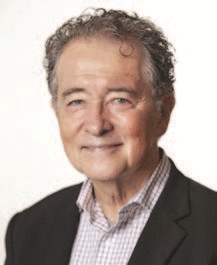 Peter S. Jensen, MD, is the founder and board chair of The REACH Institute, founded in 2006 to address a critical need: bridging the gap between scientific advances in mental health care and the children and families who need them most. He is the former associate director of child and adolescent research at the National Institute of Mental Health and was the NIMH lead investigator for the landmark Multimodal Treatment Study of Children with ADHD (MTA) study.
Other Articles in this Edition
Offering a Safe, Supportive Space: The Manhattan Adult ADD Group
You Can Cope with Social Anxiety
Understanding Parent Perceptions About ADHD
CHADD on the Global Stage: Highlights from the 10th World Congress on ADHD
The Gentle Giant of ADHD: Honoring L. Eugene Arnold
Planners and Students with ADHD
Tutoring Markus in Math: External Executive Function Supports, ADHD, and Long Division
Helping Students with ADHD Navigate the Challenges of College Life
Should You Include ADHD in Your College Application?
How Occupational Therapy Is Transforming Lives for Adults with ADHD
ADHD Before It Had a Name: Growing Up Untreated in the 1960s