Does Adult ADHD Increase the Risk of Dementia?
L. Eugene Arnold, MD, MEd; Mary Solanto, PhD; and Russell Schachar, MD
Download PDF
The quick answer is “probably, if untreated.”
A recent article in JAMA Open reported a study of this question from Israel. The investigators studied 109,218 members of a health maintenance organization who were born between 1933 and 1952, beginning the follow-up in 2003 when they averaged about fifty-six years old and ending in 2020.
 During that seventeen years, 730 had an adult diagnosis of ADHD and 7,726 developed dementia (Alzheimer’s disease, for example). The rate of dementia was 13.2% for those with adult ADHD and 7.0% for those without adult ADHD. After adjusting for possible confounds (sources of error), the hazard ratio was 2.77, indicating almost triple the rate of dementia for the adults with ADHD.
Further analyses practically ruled out the possibility of reverse causation—that dementia caused ADHD syndrome.
The silver lining is that those who took psychostimulants showed little to no increased risk. This suggests a possible preventive strategy. Although this finding needs to be replicated, it is consistent with other recent research indicating a beneficial effect of stimulants on apathy and cognitive function in adults with Alzheimer’s disease (Kishi et al, 2020).
As enlightening and useful as this study is, it has some severe limitations that warn against complete premature acceptance. For one thing, the ADHD characteristic was defined as adult diagnosis after average age of fifty-six, with no consideration of childhood/adolescent or even young adult diagnosis. It is not clear whether an “outgrown” childhood diagnosis with adult recovery also increases dementia risk.
Further, it is not clear how the ADHD diagnoses were done. Given the vagaries of diagnosing early dementia and late-onset ADHD, the authors might not have been able to distinguish inattention, cognitive deficit, or executive function problems arising from early dementia from the same traits arising from late-onset ADHD. What is needed is a study of the outcome of children with well-diagnosed ADHD who are followed into old age.
Another important consideration is that this Israeli cohort, with the older end born as early as 1933, may include a considerable number of refugees from the Holocaust who endured horrific childhood experiences. We do not know how such experiences may influence the risk of later dementia (or ADHD).
The study needs repeating in other countries with other experiences. It would also be interesting to investigate the pathophysiological mediators of this finding—for example, does it result from prefrontal dysfunction common to both disorders?
Nevertheless, this study adds to accumulating evidence that untreated ADHD increases health risk, both physical and mental. For example, Barkley (2018) has shown that ADHD shortens estimated life expectancy by eight to twelve years, due to higher rates of accidents, substance use, eating disorders/obesity, cardiovascular disease, diabetes, and other health conditions. Some of the latter were also incidentally documented to be associated with dementia in the study summarized here.
These considerations emphasize the importance of ADHD treatment not only for immediate problems, but also as prevention of other health problems—both physical and mental—and premature death. In this regard not only stimulants and behavioral treatment have some encouraging reports, but also lifestyle treatments, which can augment the established medical and psychological treatments. Important lifestyle treatments include: adequate sleep (sleep deficit can aggravate and even mimic ADHD), adequate exercise, and nutrition, both healthful diet, especially vegetables (Robinette, 2022), and multivitamin/mineral supplements (Johnstone, 2022). These support both physical and mental health, with a reasonable expectation of preventing or delaying dementia.
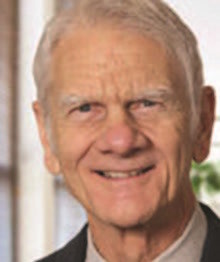 L. Eugene Arnold, MD, MEd, is professor emeritus of psychiatry at The Ohio State University, where he formerly was the director of the division of child and adolescent psychiatry and vice-chair of psychiatry. He is a co-investigator in the OSU Research Unit on Pediatric Psychopharmacology. He has forty-five years of experience in child psychiatric research, including the multi-site NIMH Multimodal Treatment Study of Children with ADHD (“the MTA”), for which he was executive secretary and chair of the steering committee. For his work on the MTA he received the NIH Director’s Award. A particular interest is alternative and complementary treatments for ADHD. His publications include nine books, seventy chapters, and more than three hundred articles. In addition to serving on the professional advisory board, Dr. Arnold is CHADD’s Resident Expert.
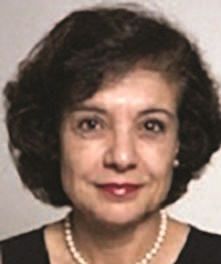 Mary V. Solanto, PhD, is professor of pediatrics and psychiatry at the Hofstra-Northwell School of Medicine, Long Island, New York. She developed a novel cognitive-behavioral intervention to target problems of executive self-management in adults with ADHD. The manual for therapists, Cognitive-Behavioral Treatment of Adult ADHD: Targeting Executive Dysfunction, was published by Guilford Press (2011). She is a frequent reviewer for professional journals and has served on study section/grant review panels for NIMH. She is a member of the editorial boards of the Journal of Attention Disorders and the ADHD Report (Guilford Press), and serves on the professional advisory boards of CHADD, NCLD, and APSARD.
 Russell Schachar, MD, is a practicing child and adolescent psychiatrist, professor in the department of psychiatry at the University of Toronto, and senior scientist in the Research Institute at the Hospital for Sick Children in Toronto, Canada, where he holds the Toronto Dominion Bank Chair in Child and Adolescent Psychiatry and heads a cognitive neurosciences laboratory which focuses on psychiatric disorders of childhood and adolescence. Dr. Schachar serves on CHADD’s professional advisory board.
REFERENCES AND ADDITIONAL READING
Levine SZ, Rotstein A, Kodesh A, et al. Adult attention-deficit/hyperactivity disorder and the risk of dementia. JAMA Network Open 2023;6(10)e2038088. https://jamanetwork.com/journals/jamanetworkopen/fullarticle/2810766
Barkley RA & Fischer M. (2018, Dec 10). Hyperactive Child Syndrome and Estimated Life Expectancy at Young Adult Follow-Up: The Role of ADHD Persistence and Other Potential Predictors. Journal of Attention Disorders, 1087054718816164. https://journals.sagepub.com/doi/10.1177/1087054718816164
Robinette LM, Hatsu I, Johnstone JM, Tost G, Bruton AM, Eiterman LP, Leung BMY, Odie JB, Orchard T, Gracious BL, Arnold LE. Fruit and Vegetable Intake is Inversely Associated with Severity of Inattention in a Pediatric Population with ADHD Symptoms: The MADDY Study. Nutritional Neuroscience. 2022 May 10:1-10. https://pubmed.ncbi.nlm.nih.gov/35535573/
Johnstone JM, Hatsu I, Tost G, Srikanth P, Eiterman L, Bruton A, Ast H, Robinette L, Stern M, Millington E, Gracious B, Hughes A, Leung B MY, Arnold LE. Micronutrients for Attention-Deficit/Hyperactivity Disorder in Youth: A Placebo-Controlled Randomized Clinical Trial. Journal of the American Academy of Child and Adolescent Psychiatry. https://www.jaacap.org/article/S0890-8567(21)00473-1/fulltext
Kishi T, Sakuma K, & Iwata, N. (2020, Apr). Efficacy and Safety of Psychostimulants for Alzheimer’s Disease: A Systematic Review and Meta-Analysis. Pharmacopsychiatry, 53(3), 109-114. https://doi.org/10.1055/a-1076-8228
Other Articles in this Edition
Becoming Comfortable in Your Own Skin
Understanding ADHD from a Strengths-Based Perspective
From Meltdowns to Calm: Helping Children and Teens with Emotional Regulation
ADHD and Family Conflict: How to Reduce Verbal Aggression
Combined ADHD and Autism: How Would You Know?
Does Adult ADHD Increase the Risk of Dementia?
Do Older Drivers with ADHD Outgrow Their Crash Risk?