
Can AI Revolutionize Education for Students with ADHD?
Michelle Raz, MEd
Download PDF
AI can be a powerful tool to complement traditional teaching methods, and it offers fresh options for students with ADHD. Of course, AI is not a substitute for good instruction from an experienced teacher, but it does offer exciting new opportunities for students and teachers.
Are you interested in learning more about how AI can change education for students with ADHD? Let’s explore the practical ways that AI can help your student.
Five ways students with ADHD can benefit from AI
Personalized learning
 AI systems can evaluate students’ strengths and weaknesses using immediate, real-time information. For example, AI reading apps can monitor a student’s reading experience and responses to questions. They can track and analyze such key indicators as reading rate and accuracy, then use the data to suggest areas for improvement.
AI reading apps can also personalize learning by adjusting the material to accommodate the student’s individual style. They can speed up or slow down the text and highlight the reading passages as it moves along.
AI can also be used to adjust reading material and lessons for ADHD students with short attention spans. One way to do this is to use AI to break up the material into shorter lessons. Adjustments can also be made to keep students moving through the material at their own pace. By demonstrating that they understand the concept or that they have acquired a specific skill, students can advance to the next level. Those who need more repetition and practice can get the extra reinforcement they need. Some apps combine fun, interactive images with written information to redirect the student to areas needing reinforcement.
Interactive and gamified content
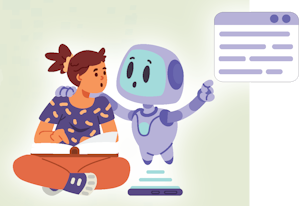 Many AI-powered educational platforms incorporate gamification, which is simply the process of turning learning into a game. Interactive lessons, immediate feedback, and in-app rewards make learning feel like they’re playing on their favorite gaming console. For ADHD students, this can make all the difference in their ability to focus and stay motivated. Students may be better able to remember new information when presented in a visual and interactive platform. It may also make them feel more positive about learning!
Real-time feedback loops
One of the hallmarks of AI in education is its ability to provide immediate feedback. For students diagnosed with ADHD, this real-time feedback that shows what they did well and where they can improve can be just what they need to keep going when they feel bored. Most apps also allow students to make corrections on the spot, building confidence and reducing frustration.
Structured time management tools
For students who have trouble with organization and time management, AI platforms offer planners, provisional schedules, and study timers. These can supplement individualized instruction in ways to organize and prioritize assignments. For example, AI apps can break multi-step assignments into smaller tasks. These features help students manage their time better, supporting learning of basic life skills that build independence.
Data collection and communication
The ability of AI systems to collect, analyze, and communicate data makes them a useful tool for understanding students’ academic profiles. Students can assess their own progress and use AI tools as a first-line strategy to get help and reinforcement of difficult concepts. Teachers can use AI to check student progress and adjust student goals. Given the ease of collecting strong data, teachers can update parents using clear and concise information.
Not all teachers will be comfortable with AI platforms, and most will have a bit of a learning curve to become fluent in AI. However, for those who are ready to try it out, there are many opportunities.
Students can assess their own progress and use AI tools as a first-line strategy to get help and reinforcement of difficult concepts.
AI in academic coaching: one coach’s perspective
In my practice, AI has been a popular tool for individualizing our intervention strategies and empowering our students. We have taught students to use AI to upload or scan text so that it can be read aloud. Some of our students upload lecture recordings so that they can listen to those aloud again, too. The app can then generate notes that our students can use as study guides.
Now, it is important to remember that instruction in notetaking can be a critical way for students to learn to organize and prioritize information. So, the emphasis here is on using AI as a strategy to supplement instruction, not replace it.
Let’s look at a real-life success story.
Joe was a student who was preparing for a comprehensive post-college board exam. He tended to process information slowly and found it easier to retain material when reading aloud. However, he often forgot what he had just read and lacked confidence in his note-taking skills. He felt overwhelmed by the 400 pages of material he needed to master to pass his exam. He was worried that he was going to fail and disappoint his family and himself.
When we introduced Joe to AI, he was intrigued and motivated to learn more about how he could use it to help himself. As Joe became fluent on the AI app, he became increasingly hopeful. The feature that allowed him to read aloud while the app recorded and transcribed his words into text became invaluable. He loved how it let him highlight important sections and review the material at his own pace, as well.
To manage his overwhelm with the huge amount of reading to review, Joe broke the reading into small chunks that he felt were achievable sections. After each study session, he used the app to generate custom flashcards and quizzes. This helped reinforce the material and track his progress after each review section. He revisited sections as needed and asked follow-up questions directly through the app in real time. He not only strengthened his understanding through this interactive review process, but built confidence in what he thought was going to be an impossible task to achieve.
Using AI in education is a development that’s likely here to stay. As the technology grows and safety protocols become more sophisticated, its use in education will surely increase, too. Used thoughtfully and creatively, AI can be a real boon to learners with ADHD.
 Michelle Raz, founder of Raz Coaching Services for Coaching Academics, Thrive Beyond Therapy, and Sprout Coach, is a board-certified coach, author, and Forbes-featured expert specializing in ADHD and executive functioning skills. Since 2010, her neuroscience-backed coaching programs have empowered neurodivergent students and professionals to succeed in life through personalized strategies, tools, and accountability rooted in positive psychology.
Other Articles in this Edition
A Virtual Village of Learners: Young Scholars Academy
How Satisfied Are You with Your Friendships?
ADHD and Social Functioning, Health, and Life Expectancy
Can AI Revolutionize Education for Students with ADHD?
Disorganization and Adolescents with ADHD
Adjusting to College: A Unique Model of Student Support for ADHD
Expecting with ADHD: Surviving Pregnancy, Birth, and Life as a New Mother
ADHD and Focus Fitness: The Gym Isn’t Just for Your Body Anymore
Chasing Excitement in a Bottle: How I Mistook Alcohol for ADHD Relief