From a Few Parents to a Massive National Voice
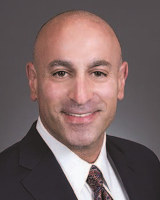
Jeremy Didier, LSCSW, LMAC, ADHD-CCSP and Jane Indergaard, DNP, RN
Attention Magazine October 2026
Download PDF
How Nearly Forty Years of CHADD Advocacy Changed Life with ADHD
In 1987, in Plantation, Florida, a psychologist named Harvey Parker sat down with two parents, Fran Gilman and Carol Lerner, because they had run out of options.

They were not trying to start a movement. They wanted two things families today might take for granted: reliable information about ADHD, and someone else who understood.
Neither one existed.
CHADD by the Numbers
There were no CHADD chapters. No CHADD website. No National Resource Center on ADHD. No ADHD Awareness Month. ADHD was not named anywhere in federal special education regulations. And children who were struggling were still written off as lazy, unmotivated, disruptive, or simply “bad.”
So they built what didn’t exist. They founded an organization that came to be called Children and Adults with Attention-Deficit/Hyperactivity Disorder—better known as CHADD.
What happened next is not well known, even inside the ADHD community. In under four decades, a local parent support group became a national voice in education policy, disability rights, treatment access, and ADHD education—reaching millions of people through its programs, resources, and advocacy.
Almost everyone diagnosed with ADHD today benefits from that work.
Almost none of them know the story behind it.
The through-line is simple. When decisions get made about people with ADHD, someone with ADHD—or someone who understands their lived experience—has to be in the room. For nearly forty years, CHADD has made sure someone was.
In celebration of ADHD Awareness Month, CHADD is honored to share a few of those rooms.
1989–1999
Getting ADHD Named
CHADD was only two years old when it took on the federal government.
Dr. Parker pressed the US Department of Education on what schools owe students with ADHD. Matt Cohen, JD, a special education attorney and future CHADD president, brought the litigator’s view. Mary Durheim, also a future CHADD president, was an educator who chaired the committee for years, bringing the classroom perspective.
The question at the center of that first campaign sounds strange now: Did ADHD count? Believe it or not, whether a struggling student got help often came down to whether one administrator happened to believe ADHD was real.
In 1991, federal education policy clarified that students with ADHD could qualify for services when they met eligibility requirements.
Then, in 1999, something small and enormously important happened: ADHD was explicitly named in federal IDEA regulations under the category Other Health Impairment.
A few words in a regulation. Ten years of work behind them.
If you have never had to sit across a conference table and argue that your child’s disability is real, it is hard to understand the power of what that meant. If you have, you already know.
The impact reached far beyond those first families. Today, an estimated 7.1 million US children ages 3–17 have received an ADHD diagnosis. Eligible students among them now have a path to services under IDEA or protections under Section 504—one that did not exist before.
2002
Building the Place Where the Answers Live
Winning recognition in the US Congress created a new problem.
Millions of families now knew ADHD was real. Far fewer knew where to find information they could trust—and bad information was never scarce.
In 2002, CHADD established the National Resource Center on ADHD through a cooperative agreement with the US Centers for Disease Control and Prevention. The NRC was to be a national home for translating ADHD science into practical, evidence-based guidance for families, adults, educators, and healthcare professionals.
And people used it.
Within its first decade, the NRC had reached more than one million people. Its reach has since grown to millions of website visits and thousands of questions answered every year by real human beings.
Twenty years later, the NRC continues to serve millions of individuals seeking trustworthy information about ADHD.
2004
One Day Became a Month
In 2004, the US Senate proclaimed and recognized a national ADHD Awareness Day. The effort to bring this about was led by Evelyn Polk Green, MSEd, then the president of the Attention Deficit Disorder Association, and counting CHADD among its key supporters. ADDA is an organization supporting adults with ADHD.
One day became a week. A week became ADHD Awareness Month.
Today, CHADD, ADDA, and the ADHD Coaches Organization (ACO) collaborate on spreading the word, and the effort reaches beyond the United States.
A group that once had to argue that ADHD existed now anchors an international celebration of awareness, understanding, and acceptance.
ADHD Across the Lifespan
ADHD is not a childhood issue. It is a lifespan issue affecting millions of Americans.
2008–2016
Children with ADHD Grow Up
Recognition in schools was only part of the picture. The kids CHADD fought for in the 1990s were in college by the 2000s. Many were becoming employees, parents themselves, and adults with ADHD navigating a world that did not understand what having ADHD as an adult meant.
In 2008, with attorney Robert Tudisco chairing the public policy committee, CHADD supported passage of the Americans with Disabilities Act Amendments Act (ADAAA) and told Congress about a Catch-22 many adults with ADHD will recognize instantly: You could be discriminated against because of your disability and, in the same breath, be told you were not disabled enough to be protected from it—because medication, hard-won strategies, and sheer effort had helped you function.
Success Doesn’t Cancel Disability
Then CHADD took the issue to the Department of Justice.
In detailed regulatory comments, CHADD asked DOJ to recognize ADHD as an impairment under ADA regulations and to acknowledge the importance of executive functioning.
DOJ’s final ADA regulations included ADHD as an example of an impairment. CHADD proudly notes that the change was made in direct response to its written and oral comments.
For every child who grew up and became a college student, an employee, a parent, or an older adult with ADHD, that sentence, recognizing CHADD as the key difference maker, still sits in the Federal Register.

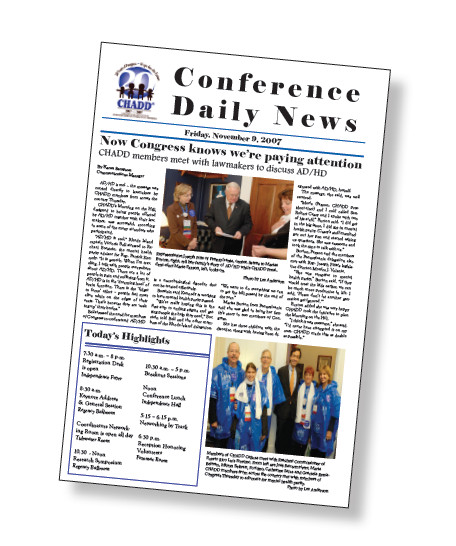
CHADD volunteers met with lawmakers during a Capitol Hill Day in 2007.

2013–2016
667 Families Changed Federal Guidance
One of CHADD’s clearest successes did not begin in Washington. It began with a question put to parents: What actually happens when you ask your child’s school for help?
Six hundred and sixty-seven families answered.
Their answers were hard to read. Nearly half of those who requested Individualized Educational Plan (IEP) services reported being denied. Among families whose children had Section 504 plans, almost two-thirds of respondents said the plans were not meeting their child’s needs.
CHADD carried those experiences to the Office for Civil Rights at the US Department of Education—and then stayed. From November 2013 through July 2016, CHADD’s public policy committee kept answering OCR’s requests for research, ADHD expertise, and information about what families were actually living through.
Nearly three years of that.
In July 2016, OCR issued its landmark Dear Colleague Letter and Resource Guide on Students with ADHD, clarifying schools’ responsibilities under Section 504.
The federal data showed how badly that guidance was needed. Between 2011 and 2015, OCR received more than 16,000 complaints alleging disability discrimination in elementary and secondary schools. About 2,000 of them—one in nine—involved a student with ADHD.
From 667 kitchen-table stories to national federal guidance: If you want one example of what community-informed advocacy can do, this is it.
Wait: CHADD Did That, Too?
Four decades produce more history than one article can hold. Two more deserve a spotlight.
CHADD at the US Supreme Court
Yes, CHADD has been part of an ADHD-related case before the US Supreme Court.
One Mom. Seven Congressional Offices.
CHADD subsequently reported that the proposal was taken
off the table.
2022–Today
Taking the Medication Shortage to Washington
When the stimulant shortage began disrupting ADHD treatment, CHADD did what it has always done: it took the community’s experience straight to the people making the decisions.
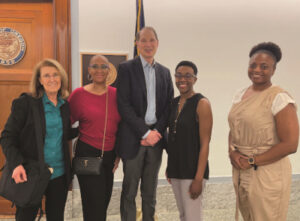 CHADD has pressed Congress, the Food and Drug Administration, and the Drug Enforcement Administration, joined congressional briefings and Capitol Hill advocacy days, pushed on supply and production, and fought for telehealth rules that matter to people far from a provider.
In June 2024, CHADD’s advocacy and public policy committee met with senior FDA officials to discuss the shortage, medication policy, and adult ADHD clinical guidelines. CHADD has also asked the FDA to consider ADHD stimulants for its Essential Medicines List.
None of this is new territory. When states tightened controlled-substance rules during the opioid crisis, CHADD pushed back on applying opioid restrictions to prescribed ADHD stimulants in Alabama and Georgia.

Why the Medication Shortage Matters
What CHADD Advocacy Is Working On Now
CHADD has also been partnering with the American Professional Society of ADHD and Related Disorders (APSARD) to advance knowledge around another long-standing gap: clinical guidance built specifically for adult ADHD.
Much of the work in the second half of this article was led by Ingrid Alpern and Jeffrey Katz, who skillfully co-chaired CHADD’s advocacy and public policy committee for the past decade. The issues look nothing like 1987. The job is identical: make sure people affected by ADHD are represented when decisions about their lives are made.
From a Few Families to Millions
The most remarkable thing about this history is how quietly it surrounds us.
A third grader receives preferential seating in class to support focus.
A college sophomore qualifies for disability protections.
An employee asks for an accommodation and gets it.
A worried parent, at midnight, finds evidence-based information rather than nonsense.
A family calling their fifth pharmacy learns that someone is carrying the same problem into a meeting at the FDA.
None of those moments announces itself. Behind each one sit meetings, surveys, letters, and parents whose names most of us will never learn.
We live inside the results anyway.
Three people sat down in Plantation, Florida, in 1987 because they did not want families to navigate ADHD alone. Nearly forty years later, that meeting has grown into a community of millions and a voice that has reached classrooms, federal agencies, Congress, the US Supreme Court, and communities around the world.
There is still plenty to do. There is also plenty worth celebrating.
Remember Matt Cohen, who was arguing for students with ADHD before ADHD appeared anywhere in federal regulations? He still sits on the advocacy and public policy committee today.
Some rooms you don’t leave.
Look what a few determined parents started.
And notice the verb tense. This history is not finished—it is ongoing.
We’re not done yet.
The People in the Room
Policy does not move on its own. It was carried by people who kept showing up:
And hundreds of volunteers whose names appear in no regulation.




Want to Help Amplify CHADD’s Voice?
Your experience matters. Together, our voices carry farther.
 Jeremy Didier, LSCSW, LMAC, ADHD-CCSP, is the immediate past president of CHADD’s board of directors. She provides assessment, diagnosis, and therapeutic services for adults with ADHD through her private practice, TreehouseADHD, in the Kansas City, Missouri, area. Grounded in CHADD’s mission of evidence-based information, support, and advocacy, she is the founder and co-coordinator of Kansas City’s CHADD chapter, ADHDKC, twice named CHADD Chapter of the Year. Didier currently serves as co-chair of CHADD’s advocacy and public policy committee. A nationally recognized speaker and contributor to the Washington Post and NBC Nightly News, her professional focus includes the underdiagnosis of ADHD in girls and women, the intersection of ADHD and addiction, and improving outcomes for justice-involved individuals. Diagnosed with ADHD as an adult, she holds a master’s degree in social work from Fordham University and a bachelor’s degree in journalism from the University of Kansas. Didier is most proud to be the mother of five children, four of whom are also neurodivergent.
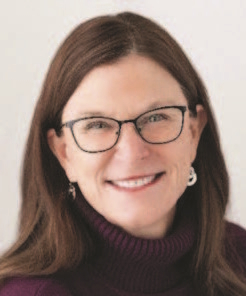 Jane Indergaard, DNP, RN, is a retired associate professor of nursing and scholar in residence at Concordia College in Moorhead, Minnesota, with over forty years of experience in clinical nursing and higher education. Her expertise includes behavioral health nursing, critical care and emergency trauma nursing, evidence-based practice, psychoeducation, and translating research into clinical and educational applications. A nationally and internationally recognized speaker, author, and media contributor on ADHD, she has over twenty-two years of experience in education, advocacy, and outreach for individuals and families affected by ADHD. She is a past member of CHADD’s national board of directors. Currently, she serves on the editorial advisory board for Attention magazine and as co-chair of CHADD’s advocacy and public policy committee. Focusing on adult ADHD, women and hormonal influences across lifespan, ADHD and the aging brain, and family-centered psychoeducation, her work is informed by professional and lived experience as a parent of children with ADHD, and a woman diagnosed later in life with ADHD.
Other Articles in this Edition
No One Learns Everything About Friendship in Kindergarten
Romantic Relationships and Adult ADHD
From a Few Parents to a Massive National Voice
ADHD Care Improves When Providers and Schools Connect
Should ADHD Be Treated If Your Teen Is Using Cannabis? What Parents Need to Know
One of the Missing Girls of ADHD
ADHD and Black Women: Simone’s Story